Shark Tank · ABC
Mark Cuban
Mark Cuban left Shark Tank in May 2025 after 14 years. The estimated $5.7B–$7.8B net worth is the headline; the more interesting story is what reality TV actually built for him.
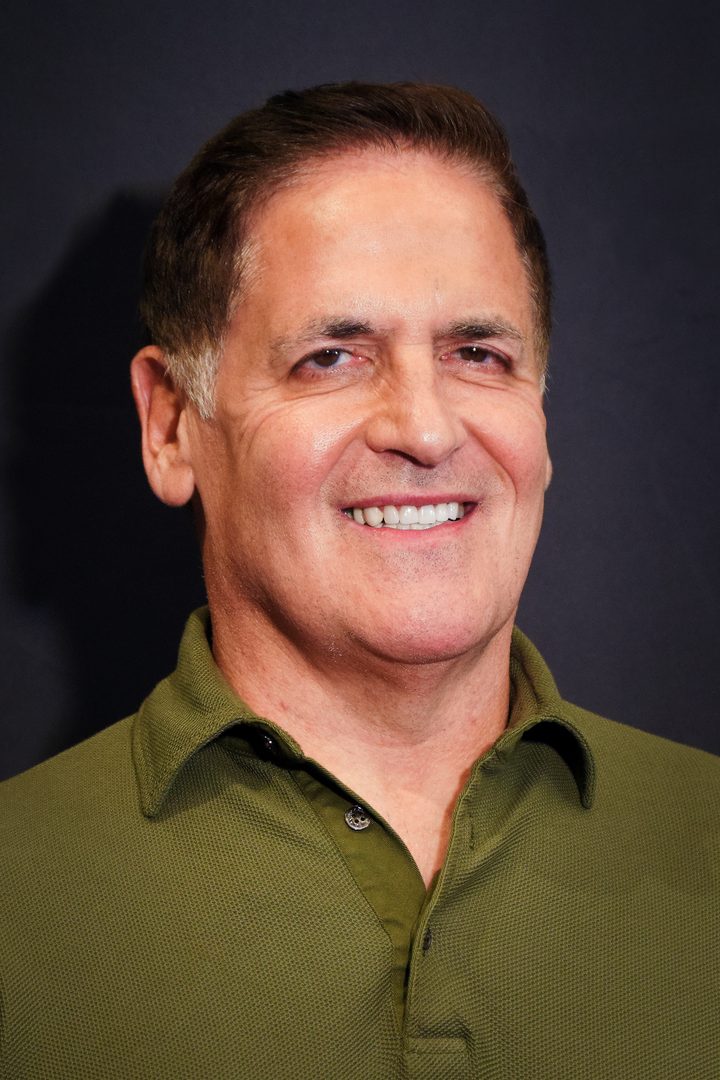
Mark Cuban was a billionaire before he was a Shark Tank shark. That’s the first thing to understand. The 1999 sale of Broadcast.com to Yahoo for $5.7 billion in stock — and Cuban’s now-famous hedge that locked in roughly $1.4 billion of that value before the dot-com crash — made him wealthy at 41 in a way that Shark Tank couldn’t materially change.
So why did he do fourteen years of network reality TV?
The answer is the most interesting thing about Cuban’s career, and it’s why the May 2025 exit from Shark Tank matters more than the dollar count.
The pre-TV chapter, briefly
Cuban co-founded AudioNet (later Broadcast.com) in 1995 with college friend Todd Wagner. The company streamed audio over the internet — a strange idea in 1995, an obvious one by 1998, an acquisition target by 1999. Yahoo bought it on April 1, 1999 for $5.7B in Yahoo stock.
The famous part is what Cuban did next. He collared his Yahoo position — purchased put options to lock in a floor price — before the stock crashed. The collar preserved roughly $1.4 billion. The Yahoo position itself fell over 90% in the next 18 months. The collar was, by some accounting, the single best hedge any individual private investor has executed against the dot-com crash.
That $1.4B is the foundation everything else was built on.
In 2000, Cuban bought the Dallas Mavericks for ~$285M. The team won an NBA championship in 2011. In December 2023, Cuban sold his 73% controlling interest to the Adelson family at a $3.5B valuation, while retaining basketball operations control. By any measure, the Mavericks bet returned roughly 10x over 23 years.
Shark Tank as a marketing channel
Shark Tank premiered in 2009, Cuban joined as a recurring “shark” in Season 2 (2011), and stayed for 14 years through the May 16, 2025 finale.
The conventional read of Cuban’s Shark Tank tenure is that it was a profitable side business. He’s said publicly that he invested roughly $33M across his time on the show and currently estimates his stake values at ~$250M. That’s a 7.5x return on capital across 14 years — solid, but not life-changing for a billionaire.
The unconventional read — which is the correct one — is that Shark Tank was an unbelievably high-leverage marketing channel for Mark Cuban the brand. Every Friday for fourteen years, 5-7 million viewers watched Cuban think out loud about businesses. Every Friday for fourteen years, his name appeared in trade press, business news, and entrepreneur podcasts as the most quoted active investor in American media.
If you priced that media presence at standard rates, the ad value would clear nine figures per year. Cuban got it for free, and got paid (Bravo cast salaries are well into seven figures per shark per season) on top.
That’s the asset that’s now compounding.
Cost Plus Drugs and the post-Tank strategy
Cuban co-founded the Mark Cuban Cost Plus Drug Company with Dr. Alex Oshmyansky in January 2022. The pitch is structurally simple: bypass the pharmacy benefit manager (PBM) economic layer, sell generics directly to consumers at manufacturer cost plus 15%, plus shipping. The model has been polarizing — beloved by patient advocates, attacked by PBM apologists — but it has continued to grow.
Recent developments:
- 2025: Cost Plus Drugs partnered with the Trump administration’s TrumpRx initiative — a politically charged collaboration that has gotten varied reactions across the political spectrum
- 2026: Cost Plus Drugs / Humana CenterWell pharmacy partnership announced — a major distribution expansion that brings Cost Plus pricing into Humana’s Medicare Advantage footprint
The model is now operating at a scale where it can credibly disrupt the existing drug-distribution oligopoly. Whether it succeeds remains uncertain. What’s not uncertain is that every Cost Plus partnership ride travels on Mark Cuban’s name. The fourteen-year media buy that was Shark Tank is now the load-bearing asset that gets Cost Plus into rooms it would not otherwise reach.
Net worth as of 2026
Estimates vary widely:
- Forbes (2025): ~$5.7B
- Bloomberg Billionaires Index (early 2025): ~$7.8B
The gap is large by billionaire-ranking standards and reflects different methodologies on his Mavericks residual interest and his private holdings. The honest answer is that the range is $5.7B to $7.8B, and that no single point estimate is responsibly defensible without taking a methodology side.
What to watch
- Cost Plus Drugs at scale. The Humana partnership is the largest distribution event in the company’s history. Whether the model survives at PBM-competing scale will be a multi-year story.
- Cuban’s political ambitions. He’s floated political ambitions repeatedly without filing a campaign. The apparatus that would file one is being assembled in public — speeches, op-eds, alignment-building with both parties. We do not predict; we watch.
- The reality TV afterlife. Cuban has been quiet about whether he’d ever return to another show. He has been notably unquiet about media in general. The next decade of his career will probably involve media production he owns.
The transferable lesson
The Cuban case is the inverse of the Frankel case. Frankel used reality TV to build a product. Cuban used reality TV to build a recognition asset that then made every subsequent business move easier.
Both are valid strategies. The Frankel version produces a clean exit. The Cuban version produces a durable platform. Which one you should run depends on what you’re trying to do with the rest of your career.
If you’re an operator with a real business already running, the Cuban model — using televised visibility to compound recognition for the next decade of your work — is probably more relevant than the Frankel model. Most people get this wrong. They go on TV trying to sell a product, when what they should be doing is building the recognition that makes every product they sell for the next twenty years easier.
The Cuban exit from Shark Tank is the end of a chapter. It’s also the beginning of the demonstration that the chapter actually paid off.
Net worth estimates: Forbes ($5.7B, 2025), Bloomberg Billionaires Index ($7.8B, early 2025). Range provided. Cuban’s Cost Plus Drugs and Dallas Mavericks figures are per CNBC and SEC/league filings.