Laguna Beach; The Hills · MTV
Lauren Conrad
Lauren Conrad turned The Hills into LC Lauren Conrad at Kohl's, Paper Crown, The Little Market, and an 8-figure quiet-luxury career — without rejoining reality TV.
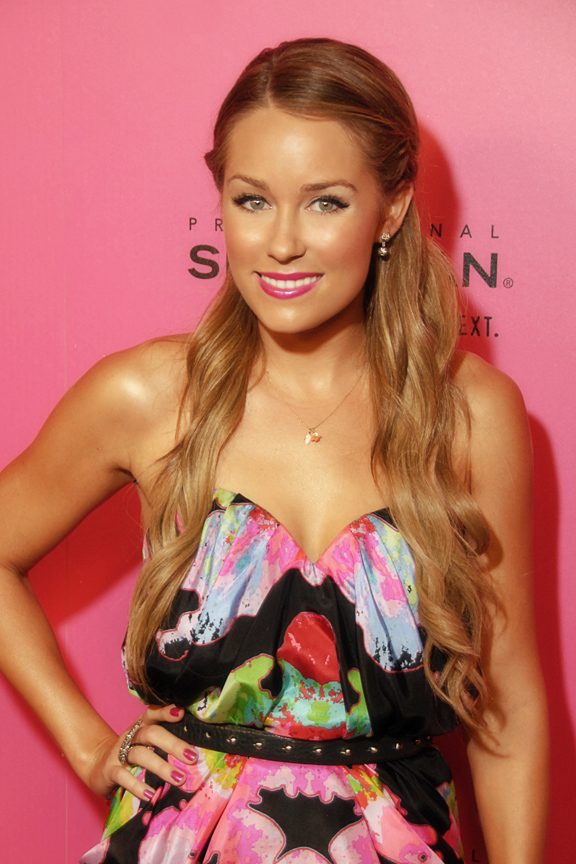
There’s a category of reality TV alumni whose entire post-show strategy is don’t go back on television. Lauren Conrad is the cleanest example.
When MTV revived The Hills as The Hills: New Beginnings in 2019, every original cast member was approached. Conrad declined. She didn’t make a public statement about it. She didn’t pitch a competing show. She didn’t take the speaking-circuit tour that usually follows that kind of decision. She just continued running the businesses she’d built and let the Hills alumni who did return absorb the new season’s narrative arc.
The net worth result, depending on source, is somewhere between $40M and $80M. The 2x spread reflects how differently sources value the LC Lauren Conrad / Kohl’s royalty stream — a private licensing arrangement that Kohl’s does not break out in public reporting, and which industry estimates put at $5-10M per year for Conrad personally over a 17-year run.
The instructive thing about Conrad isn’t the dollar figure. It’s the strategic choice.
The reality TV starting point
Laguna Beach: The Real Orange County premiered on MTV in September 2004. Conrad was 18. She was the original cast’s de facto lead — not because the producers favored her at the start, but because her on-screen demeanor (relatively muted, articulate, narratively legible) carried the show’s voice in a way the more theatrical cast members didn’t.
The Hills, premiering in May 2006, was MTV’s spinoff vehicle for her. The show followed Conrad as she moved to Los Angeles, attended FIDM (the Fashion Institute of Design & Merchandising), and worked at Teen Vogue. The structural choice was important: The Hills wasn’t a hangout show. It was a show about a young woman pursuing a fashion career. The career was the spine; the cast drama was the layer on top.
That distinction is why Conrad’s post-show options were structurally different from most reality TV alumni’s. By the time she exited The Hills in 2009, she had:
- A nationally televised case for her interest in and competence at fashion
- Documented internships and proximity to Teen Vogue
- An audience that had been watching her work, not just her relationships
- A demonstrated ability to make decisions on camera that the audience read as professional rather than performative
That’s the asset she went into business with.
The business architecture
Conrad has built and continues to operate four distinct businesses:
1. LC Lauren Conrad at Kohl’s (launched October 2009) The flagship. An affordable women’s apparel line at Kohl’s, structured as a licensing arrangement rather than a wholly-owned brand. Kohl’s manufactures, distributes, and merchandises; Conrad takes a royalty plus appears in select marketing. The line is reportedly one of Kohl’s longest-running and most successful celebrity collaborations — visible in Kohl’s 2026 “By Kohl’s” private-label campaign, which suggests the partnership is deepening, not winding down.
Industry estimates put the line’s retail sales at $200M+/year (Kohl’s does not break out brand-level figures). Conrad’s royalty is estimated at $5-10M annually.
2. Paper Crown (founded 2011) A higher-end contemporary line, including bridesmaid dresses and direct-to-consumer apparel. Less commercial-scale than the Kohl’s line, but operates at higher margins. The brand is run by a small in-house team.
3. The Little Market (co-founded 2013 with Hannah Skvarla) A fair-trade online retail nonprofit selling artisan-made goods from women-led collectives across 25+ countries. Per Hollywood Reporter, the organization has generated approximately 1.25 million hours of artisan work and now supports over 1,000 women makers globally. This is the venture Conrad has spent the most personal time on across the last decade.
4. Author Nine books and counting, including the bestselling L.A. Candy trilogy and the Fame Game trilogy — both YA novels loosely based on her Hills experience. Both series hit the New York Times bestseller list.
The choice not to return
In 2019, MTV revived The Hills as New Beginnings. The original cast was offered the chance to participate. Conrad declined.
The decision has gotten remarkably little coverage relative to its significance. Most reality TV alumni cannot afford to turn down the franchise that made them famous, particularly when the franchise is offering meaningful money to come back. Conrad could afford to and did.
The strategic logic is clear in retrospect:
- Her brand value depended on a coherent personal narrative. The post-show narrative she’d built — pivoted to fashion, became an author, started a family, runs a nonprofit — would have been complicated by returning to a show whose entire dramatic engine is conflict.
- The Kohl’s line’s audience was wider than the Hills audience. Returning would have re-tied the brand to a 2006 reality TV property that was no longer the dominant cultural reference for most LC Lauren Conrad shoppers.
- The opportunity cost of filming, in time taken from running multiple businesses, was significant.
Saying no quietly was the cleanest decision available. She made it.
What’s transferable
Three lessons.
1. The show is the launching pad, not the home. Conrad treated The Hills exactly the way she should have: as a six-year media buy that gave her an audience for whatever came next. Treating it as a home — the way some of her castmates did — would have meant being defined by the show twenty years later. She got out and built durable infrastructure outside of it.
2. Licensing beats wholly-owned, for the right operator. The Kohl’s deal is a textbook example of when celebrity licensing is the right structure. Kohl’s has the manufacturing, distribution, and merchandising infrastructure Conrad would have needed years (and millions of dollars) to build. They run the operation; she retains the brand. Her royalty rate compounds without requiring her operational time. For an operator running multiple businesses simultaneously, this is the right structural call.
3. The nonprofit is a brand asset, but only if it’s real. The Little Market is the venture Conrad seems to care about most, and it shows. Authenticity in nonprofit work is detectable. Conrad’s nonprofit work has consistently been third-party-verified, transparently reported, and operationally serious. That’s why it adds to her brand instead of being read as PR. Most celebrity nonprofit launches do not survive this test.
The case-study read
If you’re an operator reading this — particularly one whose business needs consistent brand presence but doesn’t need the founder to be available 80 hours a week — the Conrad model is one of the most efficient structures available.
You build the visibility (in her case, via TV; for you, possibly through our production company). You then use the visibility to license your brand to operators who can scale it. You retain the brand asset and a royalty stream. You free your time to keep building.
It’s not flashy. It produces $40-80M of net worth across two decades. It’s also one of the most durable brand-monetization architectures we’ve seen in the reality TV cohort, and arguably the model most worth copying.
Net worth estimates: Celebrity Net Worth (~$40M, 2025-26); higher industry estimates including lifetime Kohl’s royalties suggest ~$80M. Range provided. Kohl’s licensing economics not publicly disclosed.