

Step 1 of the Bridge · level of reality
How real is Spiders Ink?
Before we pick a look or shoot a sizzle, we decide how real the show is. That one choice tells everyone how much we plan, how much we let happen, and what the cast can expect on the day.
The seven levels
Every show sits somewhere on this ladder. Higher up we plan more; lower down the outcome is real and nobody controls it. One season can use different levels for the long show and the shorts.
Scripted reality
Written scenes. People play parts, some of them actors. It looks real and is planned line by line.
Most control, least surprise.
Placed reality
Real people put somewhere that is not their life: a house, a trip, a challenge. What they do there is real; the setting is made.
Like The Real World and the house shows.
Produced docu-soap
Their real life, with scenes we set up on purpose: a dinner, a confrontation, a reveal. They play themselves, a little bigger.
Inspired acting, like the Kardashians.
Unscripted with a known story
Before we film, we know the hero, the antagonist, the story of the season and the outcome we are aiming for. We set each day up for that story and let what people say and do happen naturally on camera.
Known story, known antagonist, known goal; the moments are not scripted.
The long-format showTrue reality
We follow a real goal with a real date and a real outcome nobody controls. Win or lose, it airs.
Like HBO's 24/7 before a fight.
Ideas for short clips on social mediaCompetition / game
Rules, a skill, a vote or a prize, and someone wins or goes home.
Repeatable, and the audience can play along.
A micro show for social media A second micro show for social mediaHost format
A host carries one repeatable idea; the guests bring the feelings. Interviews, street questions, call-ins.
The cheapest to film and the easiest to clip.
Ideas for short clips on social mediaOur pick
Spiders Ink
We film it.
Five episodes. We know the hero (Spider), the antagonist (Daisy, whose wants pull against his), the story (Spider sets Daisy a test and Annika teaches her) and the outcome we aim for (her first real client by episode five). Each day is set up for that story; what people say and do is real, and so is whether she makes it.
8 to 10 minutes an episode, two ad-break cliffhangers each.
Spider's Task
They film it themselves, once a week.
Spider sets the women of the shop a problem to solve, and they go and try it together. Each one runs the five story steps: the hook (Spider sets the task), the gap (they have no idea how), fun and games (plans, mistakes, everyone getting it wrong), the climax (the real attempt), and the resolution (they pull it off or they don't).
60 to 90 seconds, one a week.
Ink or Pass
They film it themselves, once a week.
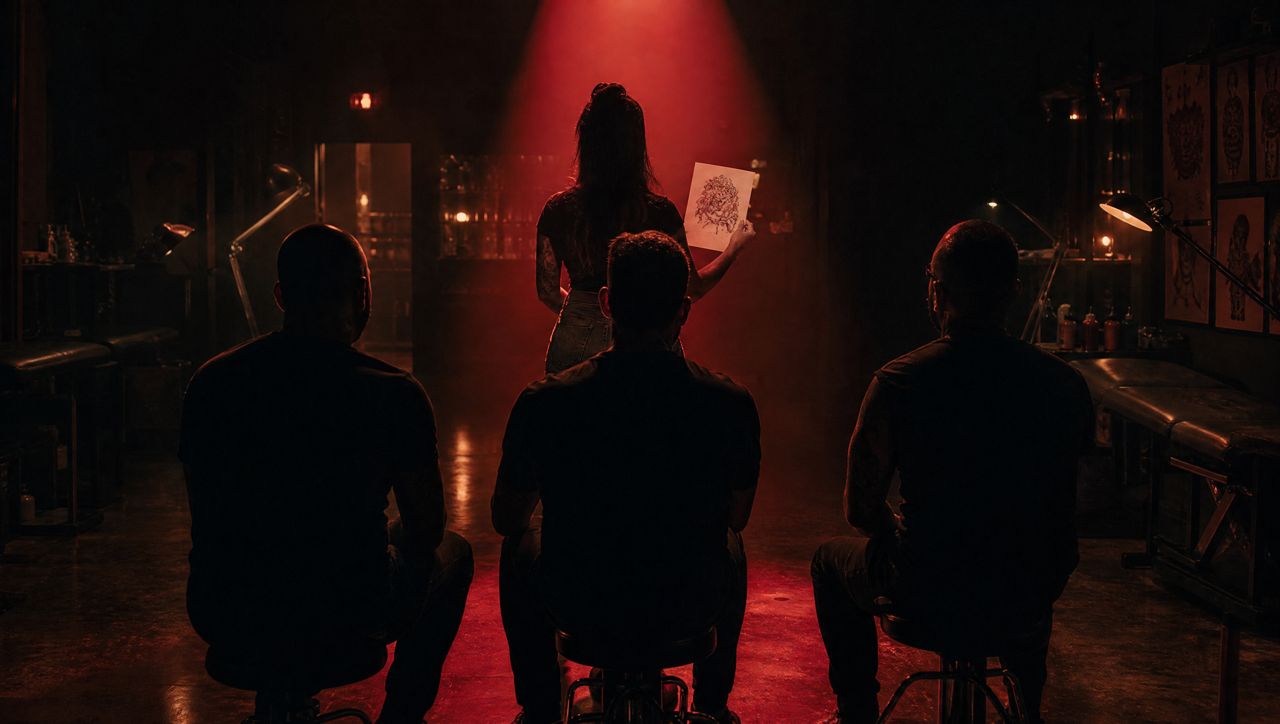
A woman pitches a tattoo idea and the artists vote ink or pass on camera. Viewers vote too, and the idea with the most ink votes each week gets tattooed.
60 to 90 seconds, every week.
Spider Says and Daisy After Dark
They film these on their phones between our shoots.
Spider answers one viewer question to camera. Daisy films her own nights: practice on fake skin, the studio, getting ready.
30 to 60 seconds, two or three a week each.
We film one show: the long-format season, at level 4, because the shop already has its rules, its cast and a real test coming. Everything else is for them to make on their own between our shoots, lower on the ladder, so their feeds always have something new and every piece points back to the season.
What the long show looks like
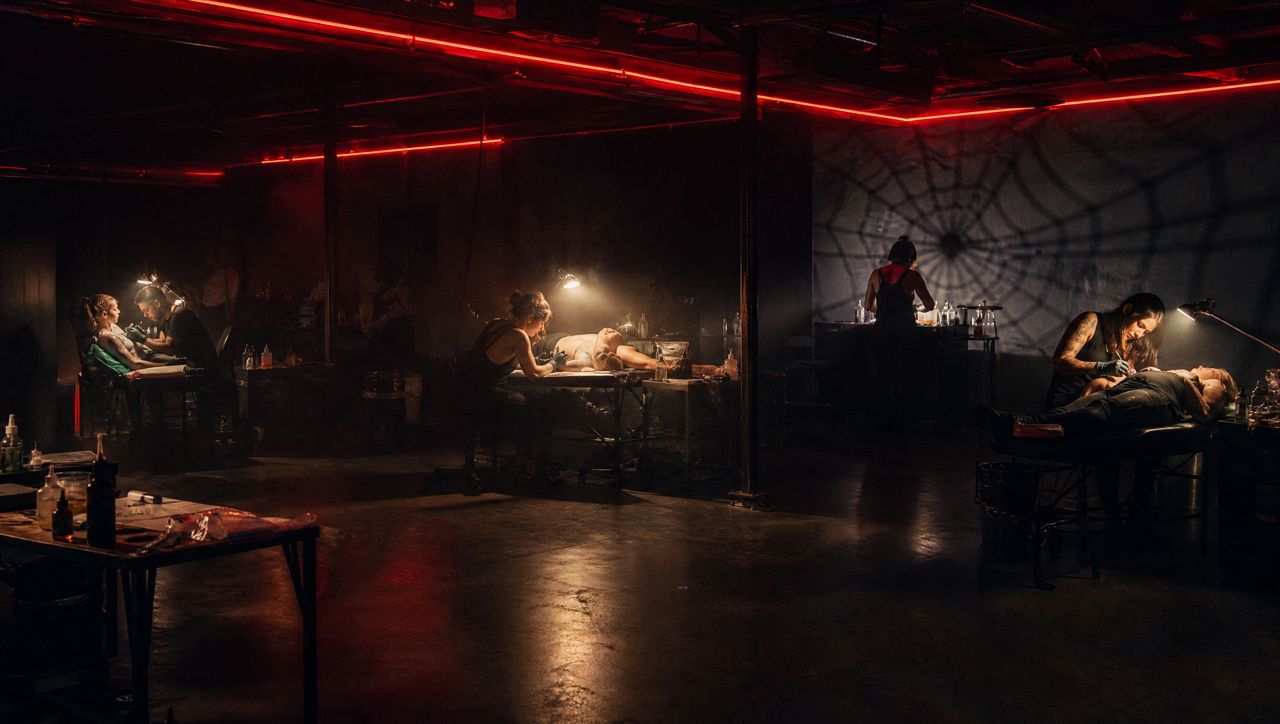
Every episode follows one lesson and one test. The A story is whether Daisy gets that lesson; the B story is the shop working around her: a client's consult, an Ink or Pass pitch, an artist's own day. We plan the setups (who is in the shop, what the lesson is, which client comes in) and film what they do with it. Confessionals are shot the same night in the same spot, in the present tense.
How the people and pieces work in it
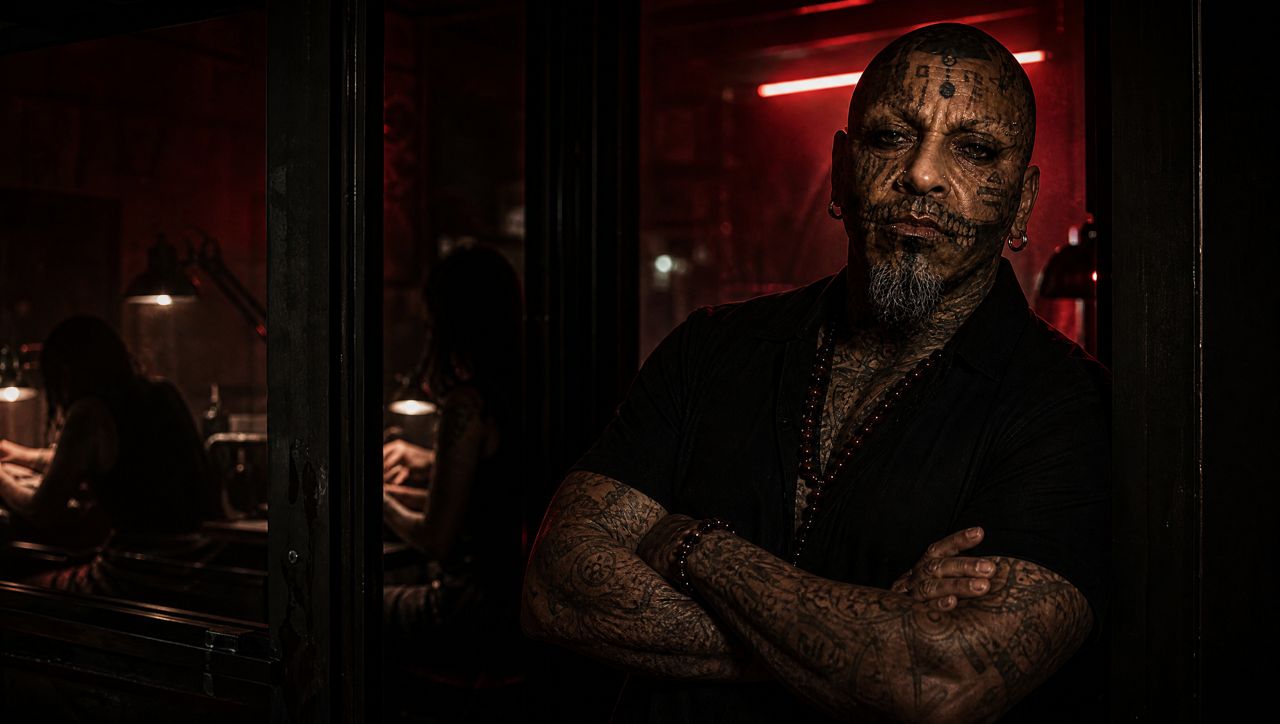
| Spider | Owns the shop and sets the tests. He drives the season; most of his scenes are short and quiet, and his confessionals carry the weight. |
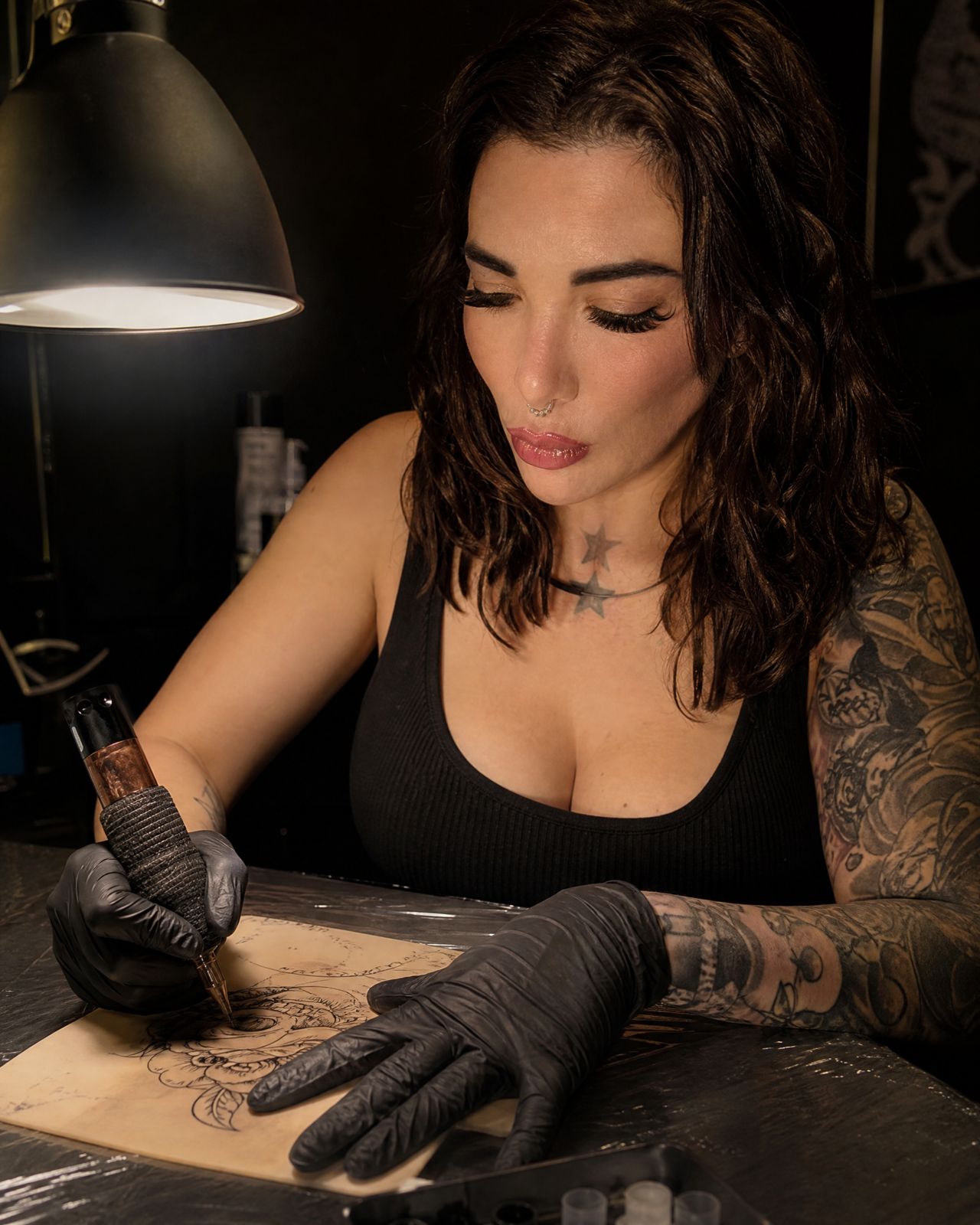
| Daisy | The apprentice. Her wants pull against his: music first, her merch in the shop, her nerves at the station. She carries the feeling of each episode. |
| Annika | The ally. She teaches Daisy the craft and is the one who follows her out the back door. |
| Electra, Sin, Nanu, Jessica | The shop working around the story: their clients, their opinions, their cutaways reacting to what Daisy does. |
| The women of the shop and their friends | Many scenes are full of women: the artists, their clients, friends who come along for a tattoo, nights out on the Strip. They fill the room and the energy of the show, and in concept frames they appear as silhouettes or from behind. |
| Clients in the chair | Real bookings. Each one is asked what the tattoo means to them, and one of them is Daisy's test. |
| Viewers | They vote on Ink or Pass and send Spider his questions, so the feed feeds the show. |
| Sponsors | A brand can sit at an ad break (this part of the season brought to you by...) or supply the shop. They never change the outcome. |
Who tells the story
Every show also needs one answer to who tells the story. It changes how we shoot confessionals, how much voice-over we write, and how much the cast has to explain on camera.
Confessionals only
No narrator. The cast tells the story in sit-down confessionals and in-the-moment reactions.
The micro shows No narrator. The task or the vote tells it.First-person narration and confessionals
The hero narrates in their own voice over the pictures ("That night I knew..."), and the cast still gives confessionals.
The short clips First person only: Spider to camera, Daisy in her diaries.First person and an omniscient narrator
A narrator sets up each episode and the stakes; the hero's own voice and the confessionals carry the feelings.
The long-format show A narrator sets up each episode and the test; Spider and Daisy carry the feelings in confessionals and their own voice-overs.Omniscient narrator only
One outside voice tells the whole story, like a documentary. Nobody explains themselves to camera.
The micro show
The micro shows are small versions of the big show, made by the shop on its own phones. They run every week, so there is always something new between episodes, and each one is built to send people somewhere: to the season, to the shop, or to the retreat. Spider's Task is the one most likely to travel: one problem, all the girls together, the same five steps every time, and a real ending.
How it builds to the money
Every piece points at the next step, and each step makes money or leads to the step that does.
- 1. The shorts find peopleSpider Says, Daisy After Dark, Spider's Task, Ink or Pass and the clips cut from each episode reach people who have never heard of the shop. Each one ends on a follow, a vote or a question.
- 2. The micro shows give them a reason to come backInk or Pass asks them to vote, Spider Says asks them to send a question, Spider's Task gives them a new story every week. Coming back is a habit before episode one is out.
- 3. The micro shows feed the big showThe idea that wins Ink or Pass gets tattooed in an episode. A Spider's Task can become an episode's B story. The people Spider Says answers can be in the season. Viewers see their vote and their question land in Spiders Ink.
- 4. Spiders Ink, the season, is where they stayFive episodes with a real story and a real outcome. This is where they decide they like these women and want to be part of it.
- 5. The ad breaks sell the retreatEvery episode's ad break sells Leave It in Vegas: a week or a weekend at the shop. It is the largest purchase, from $1,000 a day to $5,000 a week.
- 6. Everything else they can buy along the wayBooking a tattoo at Spiders Ink with the $100 deposit, gift cards, merch from the shop and from Daisy, group bookings, and brands that pay to sit inside the show.
- 7. The next seasonWhat sold, what got votes and who applied tell us what season two is about.
The ads inside the show
The ad breaks inside every episode sell the retreat, Leave It in Vegas: a week or a weekend at the shop for women who want to leave something behind and come home with a tattoo that marks it. The break comes right after an act out, so the viewer is already feeling something when the ad starts. The shorts end on the same offer.
A stream of shorts from every shoot
Two streams feed the feeds. From our shoot days we cut episode clips, cutaways, confessionals and trailers. Between shoots, the shop makes its own micro shows and clips on their phones, using the same night look.
| Short | What it is | How many, who makes it |
|---|---|---|
| Episode clips | A charged moment, the question, the answer at the end. 20 to 60 seconds. | 8 to 12 per episode · we cut them |
| Opinion cutaways | An artist reacts to what just happened, one sentence, straight to camera in the confessional spot. | 6 to 10 per shoot day · we film them |
| Confessional singles | One line from Spider or Daisy that works on its own. | 5 to 8 per shoot day · we film them |
| Trailer and next time | 60 to 90 seconds of the episode, and 8 seconds of the next one. | 2 per episode · we cut them |
| Spider's Task | The weekly micro show in five steps. | 1 a week · they film it |
| Ink or Pass | One pitch and the vote. | 1 a week · they film it |
| Spider Says | One question, his answer. | 2 to 3 a week · they film it |
| Daisy After Dark | Her phone diaries. | 2 to 3 a week · she films it |
| Behind the needle | Close-ups of real work in progress. | 3 to 5 a week · the artists film it |
The questions every client answers
Our answers for Spiders Ink are under each one. Change any of them.
- Which level is the long-format show we film?Level 4, unscripted with a known story, antagonist and outcome.
- Who is the hero, who is the antagonist, and what is the outcome we aim for?Spider is the hero; Daisy, whose wants pull against his, is the antagonist; the aim is her first real client by episode five.
- What is the season story in one sentence?Can Spider get Daisy from fake skin to her first real client in five episodes?
- What do we plan, and what do we let happen?We plan the lesson, the test, who is in the shop and which client comes in. We let the conversations, the mistakes and the ending happen.
- Which micro shows will they make on their own?Spider's Task (one a week) and Ink or Pass.
- Which short clips will they make on their phones?Spider Says and Daisy After Dark, two or three a week each.
- Who tells the story?The long show: an omniscient narrator plus first-person confessionals. The micro shows: no narrator. The clips: first person only.
- What do the ads in the show sell?The Leave It in Vegas retreat, a week or a weekend at the shop.
- Who are the other people on camera, and what do they do?Annika teaches, the artists react, the women of the shop fill the room, clients bring the stories, viewers vote and ask.
- What is never on camera?Daisy's family, her faith, her past hardships, and the people in Spider's private life.
Spiders Ink · a RealityShow.com production · draft for Spider and Daisy. Pictures are AI concept frames; faces come only from scans the cast approved.