

Step 1 of the Bridge · level of reality
How real is Scam Rescue?
Before we shoot anything for real, we decide how real Scam Rescue is. The rule we hold to: every family is real, every scam is real, and nobody on the show is promised their money back.
In 30 seconds
- The long-format show: The three-day rescue, level 4 (unscripted with a known story)1. 4:00 to 9:59 an episode, always under 10 minutes, two ad-break cliffhangers each.
- A micro show for social media: The video call, level 7 (host format)1. 60 to 90 seconds a call, two a week.
- Short clips: Quick personal clips, level 5 (true reality) and level 7 (host format)1. 30 to 60 seconds, three a week.
- Who tells the story: First-person narration and confessionals (B)9.
- Your part: read it, then use the feedback box at the bottom for anything that is wrong or unclear.
The seven levels
In short: every show sits on a ladder from fully planned (1) to fully real (5)1. The highlighted levels are the ones Scam Rescue uses; you can skip the rest.
Unscripted with a known story
Before we film, we know the hero, the antagonist, the story of the season and the outcome we are aiming for. We set each day up for that story and let what people say and do happen naturally on camera.
Known story, known antagonist, known goal; the moments are not scripted.
The long-format showTrue reality
We follow a real goal with a real date and a real outcome nobody controls. Win or lose, it airs.
Like HBO's 24/7 before a fight.
Ideas for short clips on social mediaHost format
A host carries one repeatable idea; the guests bring the feelings. Interviews, street questions, call-ins.
The cheapest to film and the easiest to clip.
A micro show for social media Ideas for short clips on social mediaShow all seven levels
Scripted reality
Written scenes. People play parts, some of them actors. It looks real and is planned line by line.
Most control, least surprise.
Placed reality
Real people put somewhere that is not their life: a house, a trip, a challenge. What they do there is real; the setting is made.
Like The Real World and the house shows.
Produced docu-soap
Their real life, with scenes we set up on purpose: a dinner, a confrontation, a reveal. They play themselves, a little bigger.
Inspired acting, like the Kardashians.
Competition / game
Rules, a skill, a vote or a prize, and someone wins or goes home.
Repeatable, and the audience can play along.
Our pick
In short: one main show2, one small repeatable show for social media3, and quick clips4 between shoots.
The three-day rescue
- Who makes it
- We film it. Working title: Scam Rescue, season one, on scamrescue.tv.
- What happens
- Each episode is one family.
- We know the hero (Mathew), the antagonist (the scammer, never seen, only their messages), the story (someone the family loves is being scammed or just lost money) and the outcome we aim for (the truth told, the bank called, the safeguards set, and a check-in 30 days later).
- We set up each of the three days for that story.
- What the family says and decides is real.
- How long
- 4:00 to 9:59 an episode, always under 10 minutes, two ad-break cliffhangers each.
- Level 4 in plain words
- Unscripted with a known story: Before we film, we know the hero, the antagonist, the story of the season and the outcome we are aiming for. We set each day up for that story and let what people say and do happen naturally on camera.
The video call
- Who makes it
- Mathew films it at his desk with a mic and a laptop. Working title: Scam Check.
- What happens
- Someone tells Mathew what is happening on a video call.
- He points out the warning signs he sees, says what he would do, and asks viewers to vote: scam or not.
- Every one runs the five story steps: the hook (what they were sent), the gap (why it feels real), fun and games (Mathew asks the hard questions), the climax (the sign that gives it away), the resolution (the one next step).
- How long
- 60 to 90 seconds a call, two a week.
- Level 7 in plain words
- Host format: A host carries one repeatable idea; the guests bring the feelings. Interviews, street questions, call-ins.
Quick personal clips
- Who makes it
- He films these on his phone between our shoots. Working titles: Stop, Think, Ask and The Sign I Missed.
- What happens
- Stop, Think, Ask: one real message someone sent in, read out, and the one sign to spot.
- The Sign I Missed: Mathew telling one moment from his own two months and what he would do now.
- How long
- 30 to 60 seconds, three a week.
- Level 5 and 7 in plain words
- True reality: We follow a real goal with a real date and a real outcome nobody controls. Win or lose, it airs.
Why this pick
- We film one show: the long-format season at level 4, because the families are real and so is the damage.
- Nothing staged, no actors.
- If we have no family for an episode yet, we tell a public story from the news, credited, over B-roll, with Mathew narrating, and say so on screen.
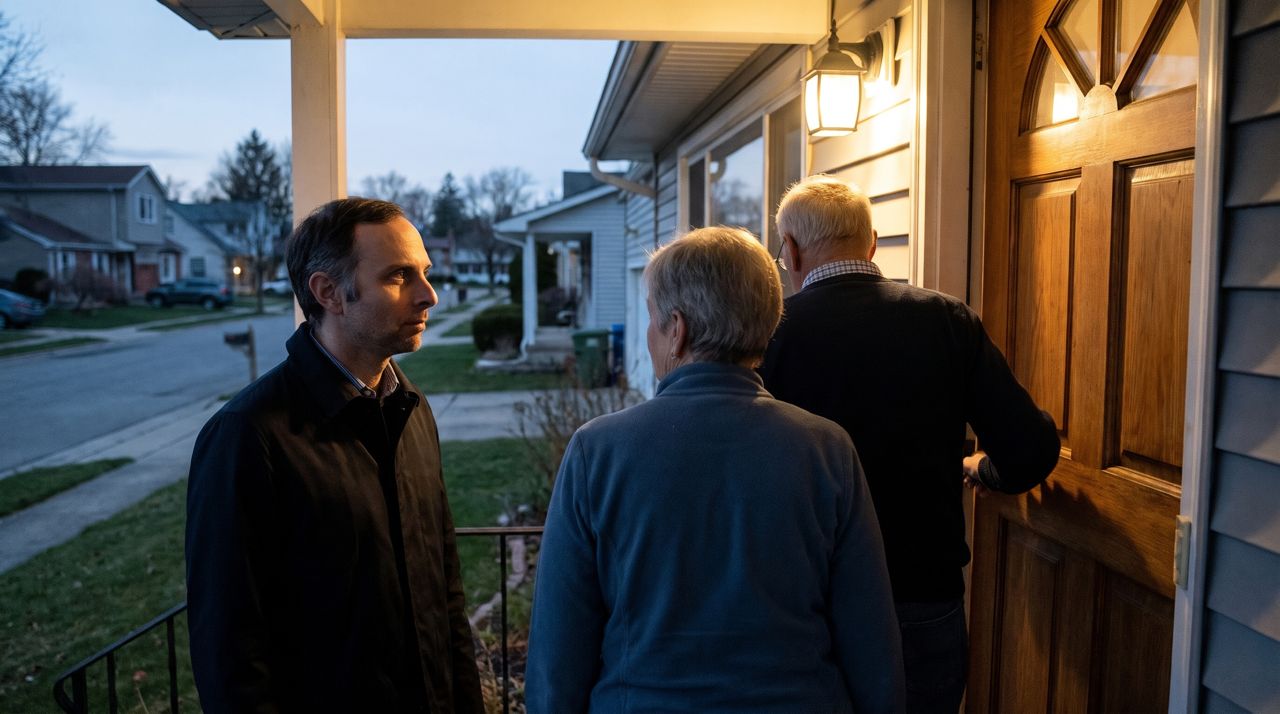
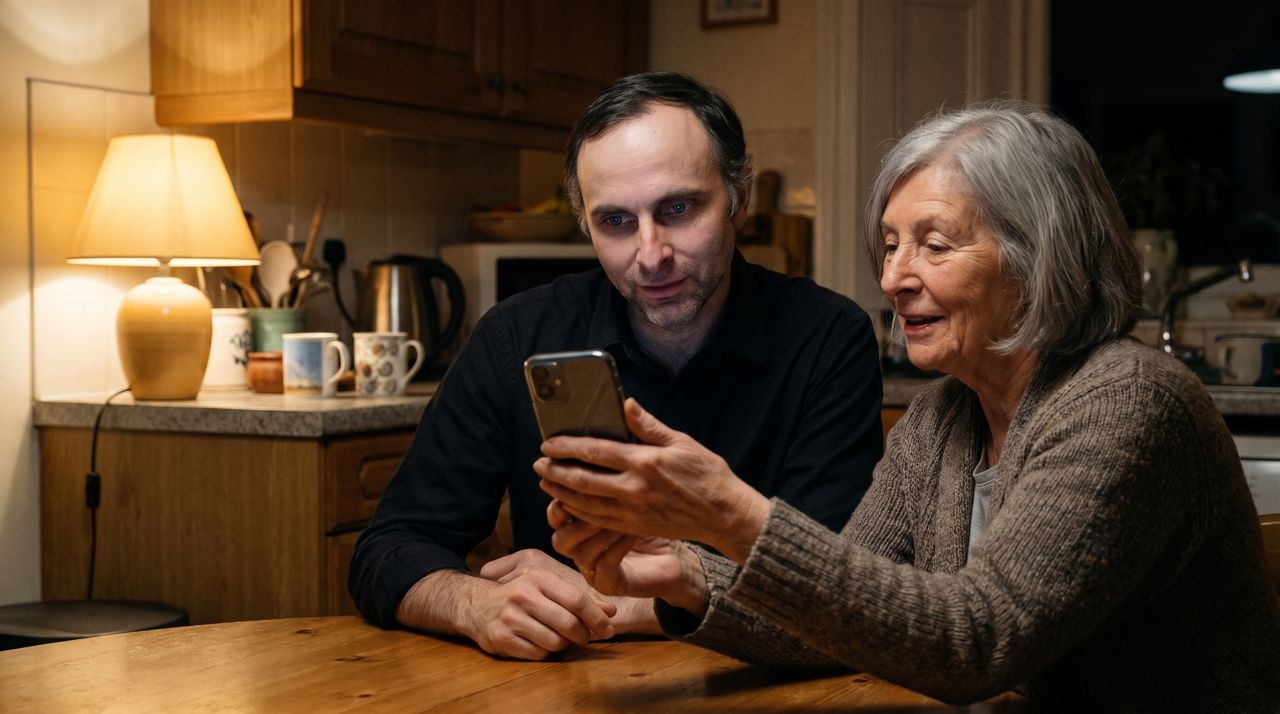
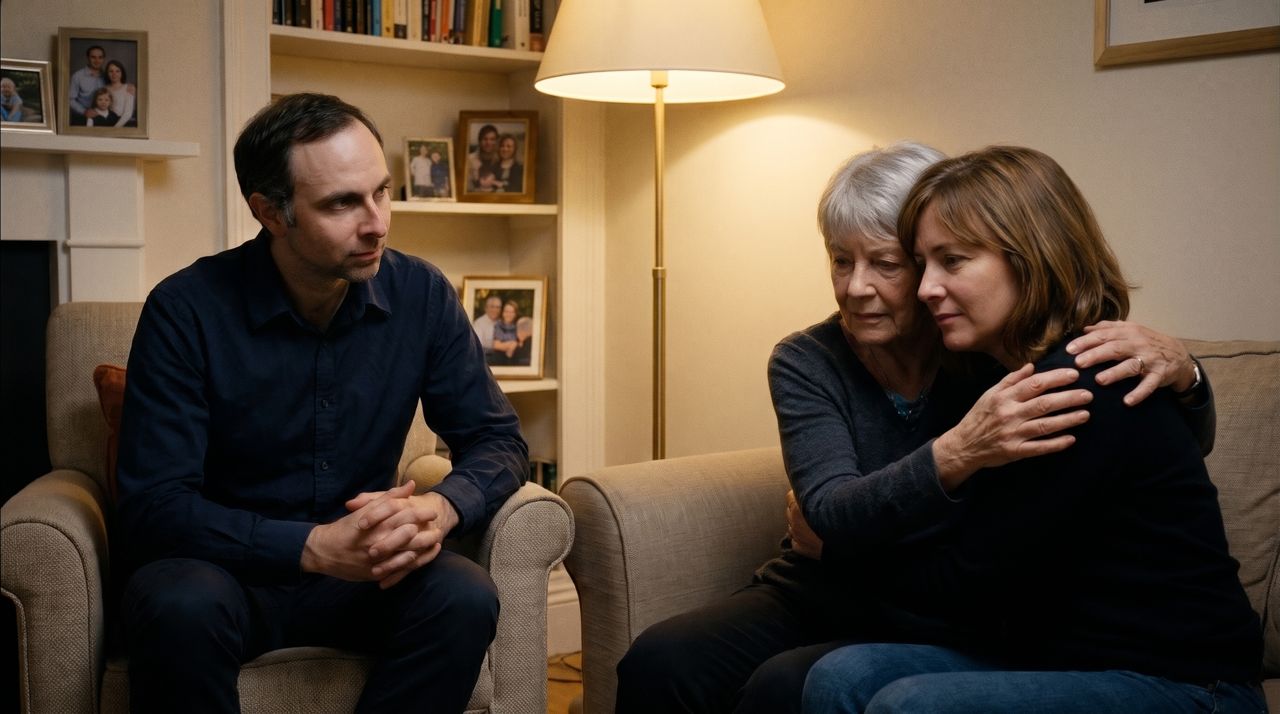
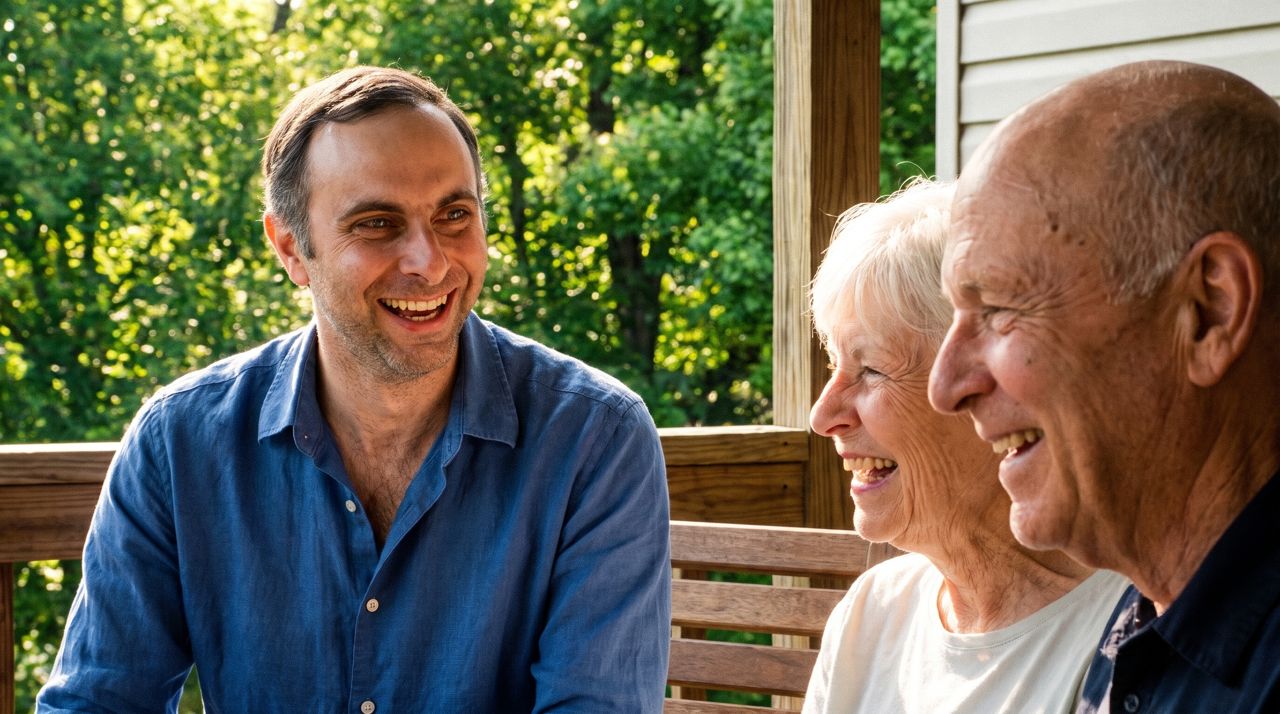
What the long show looks like
In short: how one episode of Scam Rescue goes, start to finish.
- Every episode follows one family and one lesson.
- Day 1 is the call and the facts: Mathew hears the story and finds the first message.
- Day 2 is the truth: the person tells their family everything.
- Day 3 is the safeguards: the bank call, the reports, a second signer, and Stop, Think, Ask.
- Thirty days later we go back.
- Mathew's own story runs through the season in his confessionals.
How the people and pieces work in it
In short: who is in it and what each one does. The hero5 carries every episode; the antagonist6 is what stands in the way.
| Mathew | The hero and the expert. He lost $388,000 and knows every trick from the inside. He carries the feeling of every episode, and he never promises anyone their money back. |
| The person being scammed | The heart of each episode. They choose to be on the show, sign a release, and see the episode before it airs. If it is too much, we stop. |
| Their family | The son or daughter who called us, the spouse who didn't know. The hardest scene is theirs. |
| The scammer | Never on camera. Only their messages, read out or shown with names and numbers blurred. |
| The bank | We film our side of the call only. A banker appears only if they agree on camera. |
| Jasmine and the free line | Wait Before You Send's phone line, 855-WAIT-B4-SEND. Families who call it can become episodes, only if they ask to. |
| The audience | They vote on Scam Check and send in messages. Their messages become Stop, Think, Ask clips. |
Who tells the story
In short: who talks over the pictures9. It changes how we film the confessionals8.
Every show also needs one answer to who tells the story. It changes how we shoot confessionals, how much voice-over we write, and how much Mathew has to explain on camera.
Confessionals only
No narrator. The cast tells the story in sit-down confessionals and in-the-moment reactions.
The micro show No narrator. The call tells it.First-person narration and confessionals
The hero narrates in their own voice over the pictures ("That night I knew..."), and the cast still gives confessionals.
The long-format show Mathew narrates in his own voice over each family's three days, and his confessionals carry his own story. The concept cut uses his cloned voice; the real season is him.The short clips First person only: Mathew to his phone.
First person and an omniscient narrator
A narrator sets up each episode and the stakes; the hero's own voice and the confessionals carry the feelings.
Omniscient narrator only
One outside voice tells the whole story, like a documentary. Nobody explains themselves to camera.
The micro show
In short: the small show3 that feeds the big one.
- The micro show is the small version of the big show.
- Scam Rescue is three days with one family; Scam Check is one video call with one person.
- The best calls become full episodes.
The ads inside the show
In short: what the breaks in each episode10 send people to.
- The ad breaks inside every episode sell the free line: 855-WAIT-B4-SEND and waitbeforeyousend.com.
- The viewer leaves with a number to save in their phone, and in their mom's phone.
A stream of shorts from every shoot
In short: every shoot day turns into a week of posts. Here is what and how many.
- Two streams feed his accounts.
- From our shoot days we cut episode clips, confessional singles and the moment each family tells the truth.
- Between shoots Mathew films Scam Check calls and Stop, Think, Ask clips on his own.
| Short | What it is | How many, who makes it |
|---|---|---|
| Episode clips | The first message, the moment it clicks, the hard conversation. 20 to 60 seconds. | 8 to 12 per episode · we cut them |
| Confessional singles | One line from Mathew that works on its own. | 5 to 8 per shoot day · we film them |
| Scam Check calls | One call, one sign, one vote. | 2 a week · he films them |
| Stop, Think, Ask | A message someone sent in and the sign to spot. | 3 a week · he films them |
The questions every client answers
In short: our answers for Scam Rescue are under each question. Tell us in the feedback box if any are wrong.
- Which level is the long-format show we film?Level 4, unscripted with a known story, antagonist and outcome.
- Who is the hero, who is the antagonist, and what is the outcome we aim for?Mathew is the hero; the scammer is the antagonist, seen only through their messages; the aim is the truth told, the bank called and the safeguards set, with a 30-day check-in.
- What if we have no family for an episode?We tell a real public story from the news, credited, over B-roll, with Mathew narrating, and say so on screen. Never actors passed off as victims.
- What do we never do?Promise anyone their money back, name a scammer we can't prove, show anyone who hasn't signed a release, or film a bank's side of a call without consent.
- How does a family get on the show?Through the Scam Check form, the free line, or a son or daughter who writes in. They ask; we never chase.
Words on this page
- 1Level
- How much of the show is planned. Level 1 is written like a script; level 5 is real life that nobody controls. Most of our long shows sit at 4: we plan the story, never the words.
- 2Long-format show
- The main show: full episodes, 4:00 to 9:59 each (always under 10 minutes), with a beginning, a middle and an end.
- 3Micro show
- A tiny show for social media, 1 to 2 minutes, in the same format every time so people know what to expect and come back.
- 4Short clips
- Quick phone videos between shoots. Not a show, just real moments that keep people watching.
- 5Hero
- The person the story follows. Usually you.
- 6Antagonist
- Whatever stands in the hero's way. It doesn't have to be a person: a clock, a market, a scammer.
- 7Outcome we aim for
- What we hope happens by the end. We plan for it; we never fake it.
- 8Confessional
- A sit-down where someone talks straight to the camera about what just happened. It ties the story together.
- 9Narration (A to D)
- Who tells the story. A: no narrator. B: you, in your own voice. C: you plus an outside narrator. D: only an outside narrator.
- 10Ad-break cliffhanger
- A moment that stops right before the answer, so people stay through the ad.
- 11Five story steps
- Hook, gap, fun and games, climax, resolution. Every episode and every short follows them.
- 12B-roll
- Extra footage that shows what someone is talking about: hands, places, screens.
Scam Rescue · a RealityShow.com production · draft for Mathew. Pictures are AI concept frames; faces come only from scans the cast approved.
Your feedback
Tell us what you love, what feels wrong, and what to change. Leave as many notes as you want, one at a time. Cyrus reads every one.